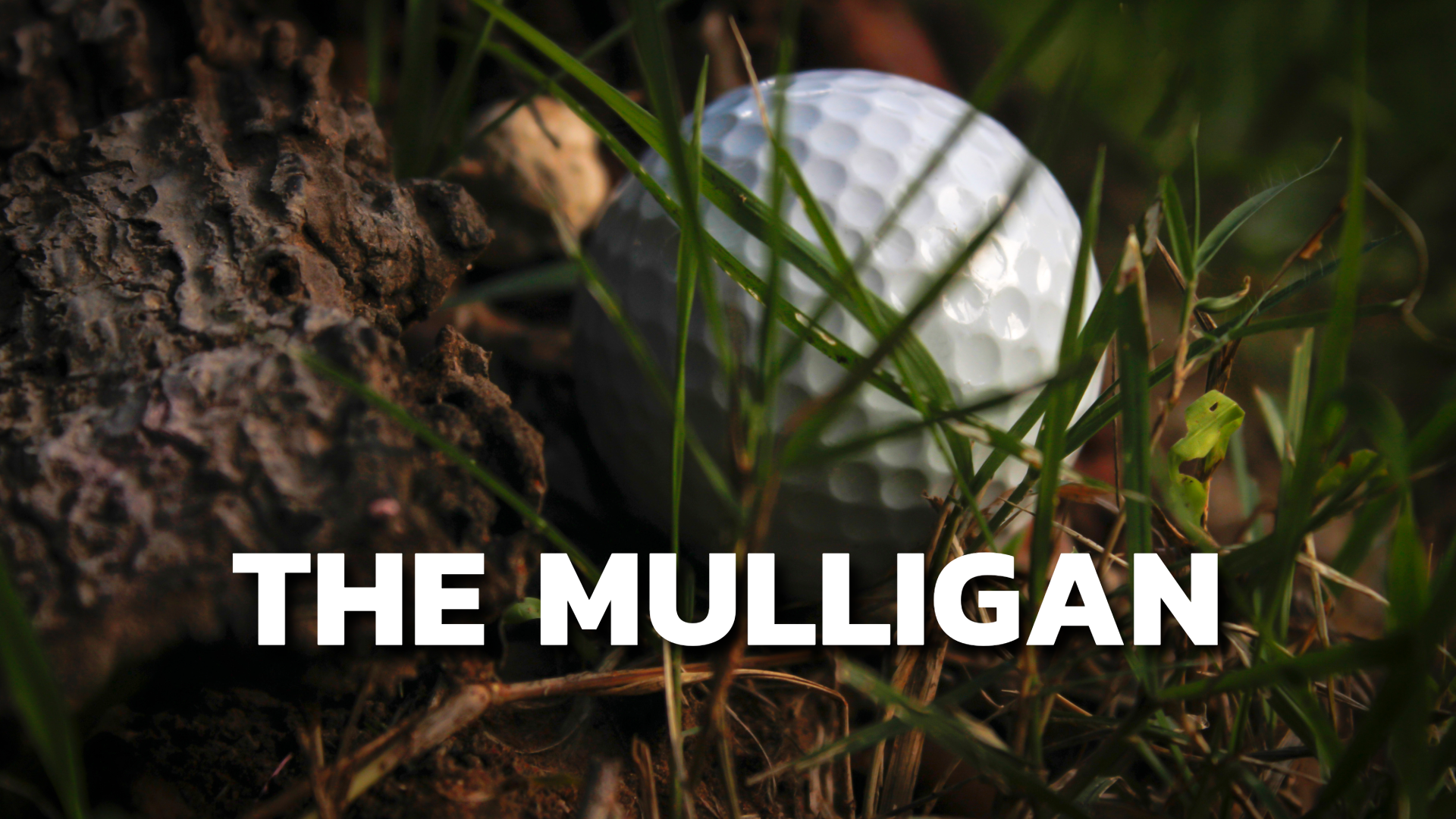
If golf had a “cheat code,” it might be called the mulligan. If you’ve played the game before, chances are you’ve heard about this golf term.
However, if you haven’t heard of a mulligan in golf, let’s explain. Picture this: you step up to the first tee, swing with enthusiasm, and… the ball slices into the trees.
In a friendly golf round, your playing partners might smile and say, “Take a mulligan.” That means you get to hit another ball from the same spot, no penalty, as if the first shot never happened.
Mulligans are part of golf’s casual culture, but there are some best practices you need to know.
Mulligans in Golf: Everything You Need to Know
A mulligan is essentially a do-over in golf: a second chance to play a shot without adding a penalty stroke to your score. It’s an informal practice that’s common among beginners, weekend foursomes, and even charity scrambles (often times with a catch, which we’ll cover below).
While it’s a common term among golfers, you won’t find the word “mulligan” in the official Rules of Golf from the USGA or R&A. Why?
Because it’s not a legal option in competitive play. In fact, if you take one during a formal match, you’d be breaking the rules and could face disqualification.
If you’re just learning the game, understanding common terms like “mulligan” will help you navigate both casual and competitive rounds. You can find more key golf definitions in this guide: 50 golf terms every beginner should know.
Origin of the Term “Mulligan”
The exact origin of “mulligan” is one of golf’s charming mysteries, there are a few popular theories:
- David Mulligan theory: The most common tale credits Canadian golfer David Mulligan. The story goes that after hitting a poor drive, he re-teed without penalty. His playing partners jokingly dubbed the do-over a “Mulligan,” and the name stuck.
- John A. “Buddy” Mulligan: Another version is from a locker room attendant at Essex Fells Country Club in New Jersey. In the 1930s, he was playing against two golfers who had practiced all morning. After he got off work and hit a poor first shot, he got a “re-do” and they coined it a mulligan in his honor.
Regardless of its exact roots, the mulligan in golf has endured for nearly a century as a lighthearted, unofficial part of the game.
Mulligans in Casual vs. Competitive Golf
Now that you know some theories about the origin of mulligans, let’s break down when to use a “do over” and when not too.
In casual play, mulligans are most often used:
- On the first tee, to shake off nerves (often referred to as a “breakfast ball”).
- After a particularly bad shot early in the round when you might not be warmed up.
- In charity scrambles, where buying a mulligan can raise funds and keep the pace of play moving.
These do-overs can make the game less intimidating for newcomers and keep a social round lighthearted.
In competitive play, mulligans don’t exist.
Every shot counts in tournaments, even if it’s a shank, a topped ball, or out of bounds. In sanctioned events, the only time you get to replay a shot without penalty is when the rules specifically call for it—such as hitting a power line and getting another attempt.
Golf Etiquette and Mulligans
For beginners and casual golfers, a mulligan can be a confidence-saver. It removes the sting of a poor shot and helps keep the game fun.
That’s why many new players say it encourages them to get out on the course more often. In casual golf, offering or taking a mulligan is as much about etiquette as it is about fun.
Here are a few guidelines, though:
- Set expectations early: Before teeing off, agree with your group whether mulligans are allowed and how many each player can take. This keeps the round fair for everyone.
- Be mindful of pace: Even in friendly play, repeated do-overs can slow the round. Keep things moving, especially if there are groups waiting behind you.
- Apply the same rules to all: If mulligans are in play, make sure every golfer has the same opportunity to use them.
- Pick your moment: Save your mulligan for a situation where the second attempt will make a real difference, like the first tee shot of the day or a tricky par 3 over water.
Used with the right spirit, a mulligan can smooth over a rough start and keep the mood upbeat. But it’s best enjoyed when everyone knows the rules of the game you’re playing.
To Mulligan or Not?
While mulligans can help make the game fun, they might harm your game too. Some golf instructors often caution that over-relying on them can slow your improvement.
Why? Because you’re missing out on valuable lessons and not developing your mental game.
Every shot—even a bad one—contains valuable feedback. Plus, learning to recover from mistakes builds resilience, sharpens decision-making, and improves course management.
In other words, the shots you wish you could take back are often the ones that teach you the most. If you do take a mulligan,
- Learn from it: Make one adjustment so you’re less likely to repeat the shot… whether it’s grip, alignment, or club choice and see how it changes the result.
- Track patterns: If you find you’re using mulligans in similar situations, that’s a clue to focus your practice on that part of your game.
Are Mulligans Good for Golf?
Ultimately, for most everyday golfers, mulligans are a great tradition to erase a bad shot and swing again without penalty. They do more help than harm as long as you don’t rely on them too much.
In casual rounds, it can keep the game light and enjoyable. In competition, though, it’s strictly off-limits, and learning to play every shot as it lies is part of the challenge.
Whether you take one or not, the key is to enjoy the process and use every opportunity—good or bad—to sharpen your skills. Mulligans may give you a clean slate for a single shot, but it’s the lessons learned from every swing that ultimately lower your scores.